Table of Contents
Browning Hi-Power History
In the realm of combat pistols, the Browning Hi-Power, often overshadowed by the iconic 1911, stands as a pivotal design that has left an indelible mark on military and civilian handgun history. This article delves into the collaborative efforts of John Moses Browning and Dieudonne Saive, exploring the development, historical significance, and enduring legacy of the Browning Hi-Power.

The Brain Trust
Originally initiated by Browning and completed by Saive after Browning's death in 1926, the Hi-Power's design revolutionized combat pistols. Browning, renowned for his prolific gun designs, and Saive, responsible for the FN Model 1949 and the FAL rifle, created a handgun that would influence subsequent designs for decades.
GP35 Pistol: Grande Puissance
The Hi-Power's journey began in 1921 when the French sought a new combat handgun. Browning, using the 1911 as a starting point, and Saive, developing a double-column, single-feed 15-round box magazine, crafted the GP-35 Grande Puissance. Despite the French passing on it, the Hi-Power gained global acclaim, with 56,000 units sold before the German occupation in 1940.
Global Impact
Saive escaped to London in 1941, bringing the Hi-Power's drawings, which led to Allied production during World War II. The Hi-Power saw action on both sides, becoming the only production firearm issued widely among both Allied and Axis forces. Adopted by over 50 armies and 93 countries, its widespread use solidified its status as one of the most influential handguns in history.
Mechanical Magic
The Hi-Power's linkless short recoil operating system, controversial magazine disconnect safety, and Saive's high-capacity magazine became industry standards. Today's combat pistols, like the Springfield Armory Hellcat, share the Hi-Power's basic mechanical philosophy.
Unrivaled Ergonomics
The Hi-Power's single-action trigger, magazine release, and thumb safety mirror Browning's 1911 design. Its comfortable grip accommodates various hand sizes, making it a favorite among users. Despite some quirks, such as a potential "hammer bite," the Hi-Power remains a cherished WWII-era pistol.
Legacy and Evolution
The Hi-Power, adopted by more than 50 armies, withstood the test of time. Even after FN ceased production in 2018, the Hi-Power's influence endures.
Browning Hi-Power Disassembly
Browning Hi-Power Variations
The modernized versions introduced by FN, Springfield Armory, and European American Armory (EAA). Originating from Browning's post-1911 era, the Hi-Power has left a lasting impact on gun history as the first successful high-capacity semi-auto handgun for over 80 years.
The Hi-Power evolved from Browning's 1911 design, with legal constraints leading to a distinct 9mm pistol. Initially designed for the French military, it featured a higher capacity, double-stack magazine, and lacked the 1911's grip safety but included a magazine disconnect safety.
Evolution and Impact
FN Herstal's Dieudonne Saive played a crucial role in finalizing Browning's design, leading to the 1935 release of the Hi-Power, adopted by the Belgian military as the P-35. It gained international acclaim, serving as the standard sidearm for various military and law enforcement agencies globally. Despite production during WWII, the Hi-Power was discontinued in 2018, sparking demand for a true-blue successor.
The Resurgence
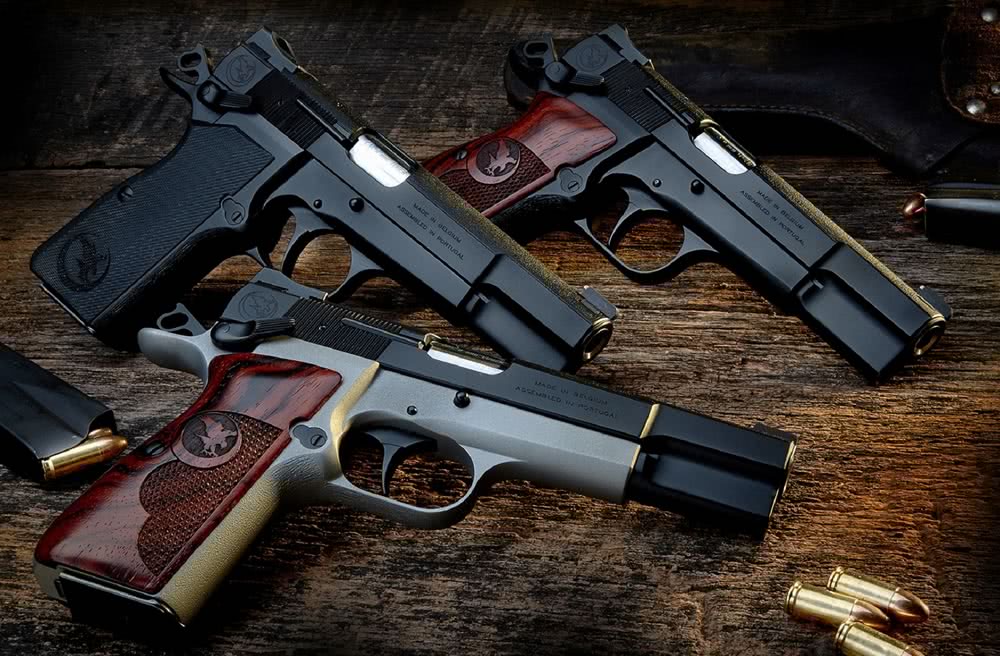
The revival of the Hi-Power is spearheaded by FN, Springfield Armory, and EAA. FN's High Power stands out with modernized features, various frame colors, grip options, and a substantial capacity boost. Springfield's SA-35 faithfully recreates the original design with updates, offering an affordable all-steel option. EAA's Girsan MC P35, a budget-friendly alternative, closely resembles the original Hi-Power but lacks some modern features.
Comparative Analysis
The Springfield SA-35, awarded the NRA's American Rifleman Handgun of the Year, provides an attractive price point and eliminates the magazine disconnect for a crisp trigger pull. FN's High Power introduces advanced ergonomics, ambidextrous controls, and an innovative takedown process, though it is heftier. EAA's MC P35 targets budget-conscious buyers with a lower price point and traditional features.
Browning Hi-Power Cleaning Tips
If you find yourself pondering over the intricacies of cleaning your Browning Hi-Power, you're not alone. Let's break it down to the basics.
Lubrication Concerns
The question arises: Are you overdoing it with the oil? The answer is, perhaps. You need to focus on points of contact. After a thorough cleaning, lubricate where the gun parts come into contact. This includes the barrel lugs, recoil guide rod assembly, trigger return spring, transfer bar channel, sear lever, and sear.
Detail Stripping: Is it Necessary?
Detail stripping, while thorough, might be more than what's needed for regular maintenance. Field stripping, focusing on key areas, should suffice for routine cleaning. However, if you opt for detail stripping, it shouldn't damage the gun. It takes about 20 to 30 seconds for an experienced individual, and reassembly should be a straightforward process.
Tools for the Job
Your arsenal of cleaning tools includes a bore brush, wool sponge, and cotton fabric. Use the bore brush to loosen gunk, then follow up with the cleaning solution-soaked cotton fabric. The sponge comes in handy for mopping up any remaining moisture. Finally, coat a cotton fabric with oil and run it through the bore to ensure proper lubrication.
Additional Tips
Additionally, using compressed air designed for cleaning electronics can be a game-changer for blasting out hidden dirt from your firearm.
Remember, cleaning and maintenance should strike a balance between thoroughness and practicality. Find what works best for you and your Browning Hi-Power, and enjoy a well-maintained firearm for years to come.
Browning Hi-Power Problems
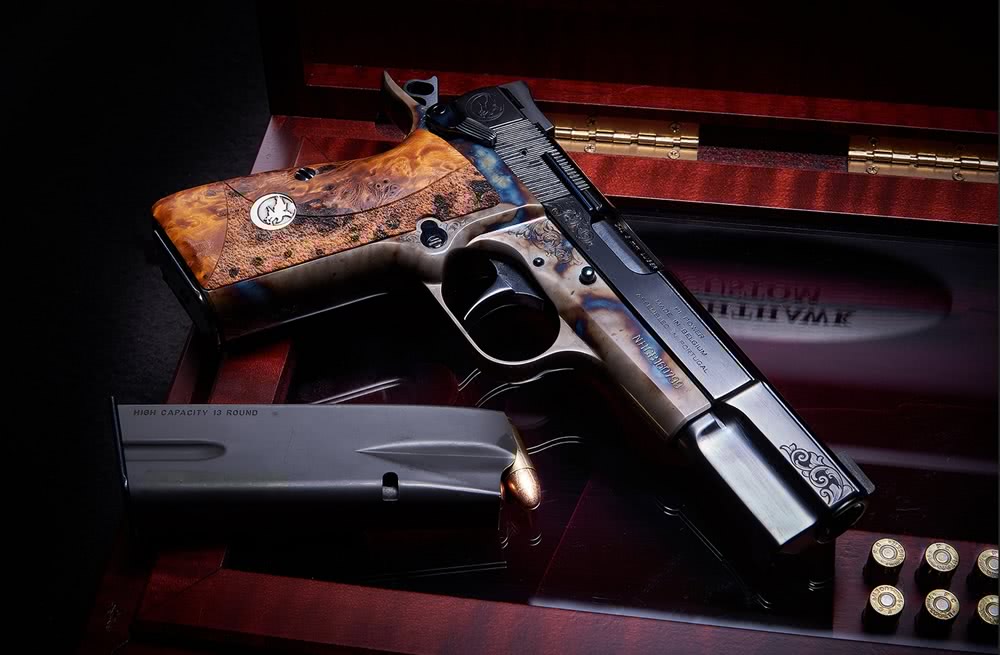
The Browning Hi-Power, renowned for its historical significance, faces challenges that impact its modern self-defense capabilities.
Magazine Disconnect Woes
A notable concern is the magazine disconnect feature hindering trigger performance.
Tang and Hammer Spur Challenges
The Hi-Power's design causes discomfort, especially with a high grip. Replacing the hammer and employing a spring kit, along with addressing the magazine disconnect, offers a cost-effective solution, enhancing user comfort.
Ambidextrous Safety Nuisance
The ambidextrous safety can be problematic for right-handed shooters. Gunsmiths can easily rectify this issue, making the Hi-Power more user-friendly and accommodating for a broader audience.
The Allure of the Hi-Power
Despite imperfections, the Browning Hi-Power remains a compelling choice due to its unique features, reliability, ease of field-stripping, and ergonomic grip. The Hi-Power's status as one of the easiest-shooting and easiest-to-control 9mm pistols globally.
Practical Insights and Troubleshooting Tips
1. Check for Burrs and Imperfections
Users emphasize examining the slide face, extractor, and ramp for any burrs or imperfections that could impede smooth operation. Burrs may cause feeding issues, and addressing them is crucial for optimal performance.2. Polishing the Feed Ramp
Members recommend keeping the feed ramp in a mirror finish using simichrome polish and a soft cloth. A polished feed ramp contributes to smoother feeding, reducing the likelihood of jams. Regular maintenance, including post-range session cleaning, is advised.3. Magazine Loading and Break-In
New magazines with strong springs may contribute to loading difficulties. Users suggest loading the magazines to their maximum capacity and letting them sit for a period to ease spring tension. This break-in process may make loading easier and improve overall magazine performance.4. Monitor Residue Build-Up
The user reports thick residue build-up on the feed ramp after 200 rounds. Some users speculate that this residue may be contributing to feeding issues. Regular cleaning, including the use of oil and a small nylon scraper, is recommended to address residue build-up that may be obstructing the feeding process.5. Quality of Magazines
Members inquire about the quality of the magazines and the condition of their springs. While the user mentions that both the pistol and magazines are new, ensuring the magazines are of high quality and properly functioning is crucial. Defective or low-quality magazines can contribute to feeding problems.6. Break-In Period
Some users highlight the importance of a break-in period for new pistols. They suggest that issues such as failure to feed may improve after firing a sufficient number of rounds, allowing the pistol's components to wear in and settle.7. Ammo Selection
Users often stress the significance of trying different types of ammunition during the break-in period. Some pistols may exhibit preferences for specific bullet types or nose shapes, and experimenting with various ammo brands can help identify the most compatible option.8. Contact the Manufacturer
If issues persist after following these troubleshooting tips and allowing for a break-in period, we recommend contacting the manufacturer. Persistent problems may require professional inspection and potential adjustments by the manufacturer's service department.Browning Hi-Power Serial Number Lookup
| Date | Historic Information | Serial Number Info | ||||||
| 1954-57 | The Hi Power 9mm pistol was introduced in 1954. | 70000-80,000 Accurate production figures are unavailable. |
||||||
| 1958 | In 1958 Browning kept better records of the Hi Power pistol, so the serial number ranges are more accurate | 80001-85276 | ||||||
| 1959 | 85268-89687 | |||||||
| 1960 | 89688-93027 | |||||||
| 1961 | 93028-109145 | |||||||
| 1962 | 109146-113548 | |||||||
| 1963 | 113549-115822 | |||||||
| 1964 | In 1964 the product code for the Hi Power was the letter "T" | 115823-T136-568 | ||||||
| 1965 | T136569-T146372 | |||||||
| 1966 | T146373-T173285 | |||||||
| 1967 | T173286-T213999 | |||||||
| 1968 | T214000-T258000 | |||||||
| 1969-75 | In 1969 Browning started using two digits for the date of manufacture which was followed by a four digit code that identified the type of Auto-5: C=Hi Power This was then followed by the serial number beginning with 1000. Example: 69C1000 = A 1969 Hi Power pistol with a serial number of 1000. |
T258001-261000 C=Hi Power |
||||||
| 1976-1997 | In 1975 Browning standardized its serial number identification which it followed until 1998.
|
Serial Number Example: 245RT01001 This would be a 9mm Hi Power pistol, manufactured in 1976 with the serial number 01001. |
||||||
| 1998 | In 1998 Browning redid the standardization of its serial number identifications to work with its new data base program, Oracle.
|
Serial Number Example: 510NN01001 This would be a 9mm Hi Power pistol, manufactured in 1999 with the serial number 01001. |